
Community development construction
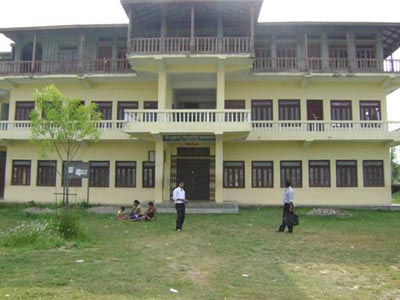
The main aim of the community development programme is to create friendly, environmental relationships between the wildlife and local people. The committee plays a vital role by fixing 30% of the total budget to development activities. The money is spent on the following…
School building construction
Embankment, Irrigation, Drainage and Calvert construction
Community Building Construction
Budhi Rapti Bridge construction
Jhuwani Community Library
Bufferzone Veterinary Service User Committee
Tharu Culture Museum
Chepang and Mushar lakes construction
Conservation Program
To create appropriate coordination conflict between wildlife and local people, the Mrigakunja User Committee has been conducting conservation awareness programs in order to preserve the bio-diversity of the National Park and Bufferzone area, specially the most endangered wildlife such as the One-horned Rhino, Bengal Tiger, Asian Elephant and Gharial Crocodile.
Electric Fencing
Bio-Gas Plants Construction
Conservation of Khorsor Bufferzone Forest
Conservation and Management of Padampur
Management of Community forests
CBAPU
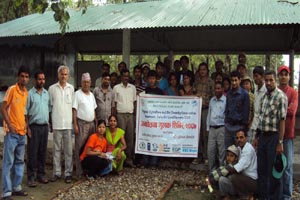
The proponents of community-based wildlife management (CBWM) argue that devolving control of natural resources to local communities increases local participation, improves management of those resources, reduces conflicts, thereby improving the resource base and provision of benefits to communities. For achieving the success in conservation, increased patrol frequency should cover the maximum area of the national park by activating the anti-poaching units at grassroots level so as to strengthen the collaborative way of conservation ensuring the mechanism of benefit. Against this background, Community Based Anti Poaching Unit (CBAPU) is one of the initiatives of CBC at local level. In Nepal, CBAPU is a sub-unit of Buffer Zone User Committee (BZUC), which is a management committee of buffer zone (BZ) area. CBAPU is the unique community-based initiative (a voluntary association of user group members) dedicated for biodiversity conservation and curbing the illegal poaching, collection of fire and fuel wood in and around buffer zones. In CBAPU, involving people inclusively from different spectra of society will ensure motivation in conservation and discouragement of illegal activities. Currently, there are more than 600 CBAPUs consisting 5500 CBAPU members in Nepal (WWF, 2018). With the effective community based anti-poaching strategy, there was dramatic improvement in the successful Rhino conservation in Chitwan National Park. Having virtue of a successful approach to curb the illegal activities, there is a greater need to assess its effectiveness, challenges and possibilities of replicating it to other parts on. Beeshazari Lake is part of Chitwan National Park (CNP), which embraces the buffer zones sharing the common boundary between people and wildlife. Thus, it acts as the easy and most viable area for the illegal trade of wildlife and wildlife products. Motivation of CBAPU in these areas can be prolific in reduction of illegal activities related to wildlife. Hence, investigations on the effectiveness of those units established in buffer zone and participation of diverse group of people in wildlife conservation was the primary focus of the study. It also includes cause and trend of poaching and illegal activities in CNP, activities of CBAPU as well as the success and challenges of CBAPU based on perception in and around Beeshazari lake of Chitwan National Park.
Income Generated Programe
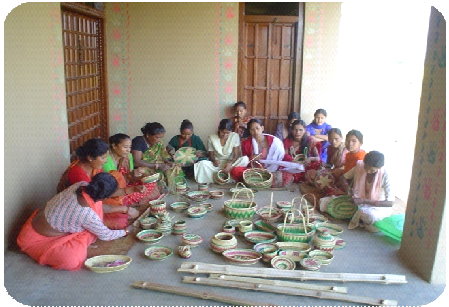
The Mrigakunja Intermediate Consumer Committee has been providing several skills development trainings to the consumers of its community forests. The Committee has also established Sauraha Community Skill Center in the tourism city of Sauraha. The skill center helps to organize several training programs, promotes and sells all the materials that are produced by those trained consumers, plays a key role in the sector of health and education, provides scholarships and free stationery to students, as well as helps the community in several economic activities like fish farming, etc.